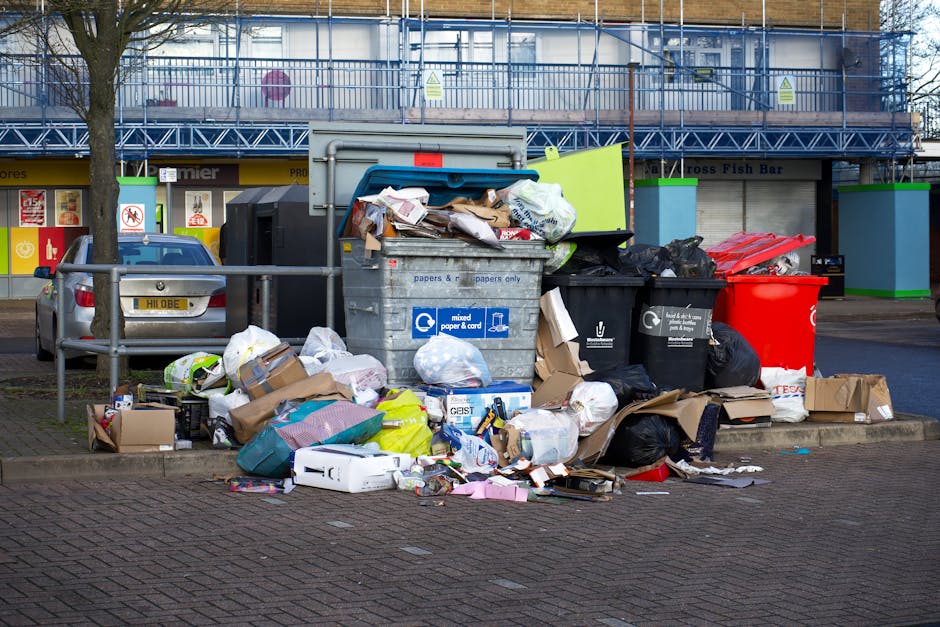
Romford Road E12 Bulky Rubbish Pickup Guide for Manor Park
If you live, work, or manage a property near Romford Road in E12, bulky rubbish has a habit of appearing at the worst possible time. A broken sofa blocking the hallway. An old wardrobe that will not fit through the stairs. A garage corner that somehow became a storage unit. This Romford Road E12 bulky rubbish pickup guide for Manor Park is here to make the whole thing less stressful, and a lot more practical.
Truth be told, bulky waste is rarely just about "getting rid of stuff". It is about access, timing, safety, sorting what can be reused, and avoiding that awkward moment when a heavy item is half out the door and nobody quite wants to say, "Right, now what?" Below you will find a clear, local-friendly guide covering how bulky rubbish collection works, what to expect, what to avoid, and how to choose the right disposal route for your situation.
For readers comparing wider clearance help, it can also be useful to look at general waste removal options, or more specific services such as furniture disposal, mattress and sofa disposal, and fridge and appliance removal.
Table of Contents
- Why Romford Road E12 bulky rubbish pickup guide for Manor Park Matters
- How Romford Road E12 bulky rubbish pickup guide for Manor Park Works
- Key Benefits and Practical Advantages
- Who This Is For and When It Makes Sense
- Step-by-Step Guidance
- Expert Tips for Better Results
- Common Mistakes to Avoid
- Tools, Resources and Recommendations
- Law, Compliance, Standards, or Best Practice
- Options, Methods, or Comparison Table
- Case Study or Real-World Example
- Practical Checklist
- Conclusion
- Frequently Asked Questions
Why Romford Road E12 bulky rubbish pickup guide for Manor Park Matters
Romford Road is one of those East London routes where life is constantly in motion. Flats, terraces, shops, landlords, offices, and family homes all sit within a busy, tightly used area. That means bulky rubbish is not just an eyesore; it can quickly become a practical problem. A worn-out sofa in a front room, an old mattress in a top-floor flat, or building waste left too long outside can create access issues, safety risks, and neighbour complaints. Nobody wants that, and to be fair, nobody wants to carry a heavy wardrobe down three flights of stairs at 7am either.
This matters even more in Manor Park because local properties often have narrow entrances, shared stairwells, limited loading space, and unpredictable parking. A pickup plan needs to work around all of that. If you do it well, you avoid delays, reduce lifting risks, and keep the job tidy. If you do it badly, the day can unravel fast.
There is also a financial angle. Bulky waste left too long can become a clutter problem, and clutter tends to breed more clutter. One item becomes five, then ten, and suddenly the job is more involved than you first thought. A proper pickup guide helps you make the right call early, whether that means reusing, separating recyclable items, or booking a targeted clearance service such as house clearance or flat clearance.
Expert summary: The best bulky rubbish pickup is rarely the quickest "just chuck it all out" approach. It is the one that fits your building, your access, and the type of waste you actually have.
How Romford Road E12 bulky rubbish pickup guide for Manor Park Works
At a practical level, bulky rubbish pickup usually follows a simple pattern: identify the items, check what can and cannot be collected, choose a disposal method, and arrange collection at a time that suits access. Simple on paper. Slightly more awkward in real life, especially if the item in question is a sofa that appears to have become one with the staircase.
The first step is understanding the type of bulky waste you have. That might include furniture, appliances, mattresses, cabinets, garden furniture, shelving, exercise equipment, or mixed household items from a move or clearance. Different items may need different handling. For example, a fridge or freezer needs careful removal because of its size and components, while a sofa or mattress is more about safe lifting and transport.
On Romford Road, the "how" often depends on access. Can a van stop nearby? Is the item on a ground floor, or does it need to come down narrow stairs? Can the collection happen without blocking a shared entrance? These details are not minor. They shape the whole job.
In many cases, people compare a direct collection with a more complete service. A simple load of one or two items may suit a straightforward pickup, while larger jobs may be better handled through home clearance, garage clearance, or loft clearance. If the waste comes from a renovation, builders waste clearance may be the more sensible route.
Sometimes people ask whether bulky rubbish pickup is basically the same as skip hire. Not quite. A skip is better for ongoing loading over time, while a pickup is better when you want items removed quickly and directly from the property. If you are weighing up what fits your job, the page on what can go in a skip can be a useful comparison point.
Key Benefits and Practical Advantages
The biggest benefit is obvious: space comes back. But the less obvious advantages are just as important. A tidy property is easier to use, easier to clean, and easier to show if you are renting, selling, or managing an empty unit. One morning of clear-out work can change the feel of a room completely. You notice it in the echo, the light, the simple fact that you can walk through without turning sideways.
- Safer access: Large items no longer create trip hazards or block exits.
- Less stress: You avoid last-minute lifting and awkward disposal decisions.
- Better planning: You can separate reusable items, recyclables, and waste properly.
- Cleaner presentation: Important for landlords, sellers, and business premises.
- More efficient use of space: Especially in flats, shared homes, and compact commercial units.
There is also a quieter benefit: peace of mind. Once the bulky item is gone, the mental noise drops too. That pile in the corner stops nagging at you every time you walk past it. Small thing, maybe. But in a busy household or business, small things matter.
If you are disposing of furniture specifically, it is worth reviewing furniture clearance and furniture disposal options, because the best route often depends on condition, size, and whether items can be reused.
Who This Is For and When It Makes Sense
This guide is useful for a fairly wide group of people, which is probably why the topic comes up so often around Manor Park. If you are in any of the situations below, bulky rubbish pickup is likely worth considering sooner rather than later.
- Homeowners: For old beds, broken wardrobes, worn sofas, and awkward garage clutter.
- Tenants: For end-of-tenancy clear-outs or replacing bulky household items.
- Landlords: For void properties, leftover tenant items, and quick turnarounds between lets.
- Letting agents: For tidy, reliable removals that help prepare a property for viewing.
- Businesses: For shop fittings, office furniture, storage overflow, and refurbishment waste. You may also want business waste removal or office clearance.
- Builders and decorators: For bulky offcuts, broken fixtures, and strip-out debris.
It makes sense when the item is too large for normal bags, too heavy to move safely on your own, or too awkward to dispose of through your day-to-day waste stream. It also makes sense when time matters. If you have a property inspection, handover, or next-day delivery coming up, the faster route is often the calmest one.
And yes, sometimes it is simply the best choice because you do not fancy spending your Saturday with a screwdriver, a blanket, and a lot of regret. Fair enough.
Step-by-Step Guidance
Here is a practical way to handle bulky rubbish on or near Romford Road without overcomplicating it.
- List the items clearly. Write down what needs removing. Include quantity, size, and any obvious issues such as damage, water exposure, or disassembly needs.
- Separate by type. Furniture, mattresses, appliances, mixed household junk, and building waste may need different handling. Do not leave sorting until collection day if you can help it.
- Check access. Measure staircases, doorways, lifts, and any narrow turns. A few centimetres can make all the difference.
- Think about safety. Heavy items should not be dragged across floors or carried in a way that risks injury. If something feels like a two-person job, it probably is.
- Choose the right disposal method. Decide whether a direct pickup, a full clearance, or a specialist service suits the job best.
- Arrange a suitable time. Try to avoid peak congestion if the pickup needs street access. In Manor Park, timing can affect everything.
- Prepare the route. Clear hallways, move fragile items, and protect floors if the route is awkward or tight.
- Confirm the collection details. Make sure everyone understands what is being removed and what is staying behind.
- Keep documentation if needed. For business or landlord jobs, retain records of what was collected and when.
When in doubt, start small. One room. One corner. One category. A big clear-out becomes manageable very quickly once it is broken into pieces. You will notice the difference almost immediately.
Expert Tips for Better Results
After dealing with plenty of awkward bulky jobs, a few habits stand out. They save time, and more importantly, they prevent those little disasters that turn a quick pickup into a half-day headache.
- Measure before you move. If the item will not clear the door, do not assume it will "just about" fit.
- Check for hidden weight. Wet wood, old cabinets with drawers, and appliances with internal components can be heavier than they look.
- Empty items first. Shelving, drawers, and cupboards should be cleared out before lifting.
- Protect shared areas. In flats and converted houses, stairwells and entrances matter. A bit of protection avoids a lot of awkwardness.
- Keep reusable items separate. If something can be repurposed, donated, or reused, do not mix it with general waste.
- Ask about specialist handling. Items like fridges, sofas, or mixed waste may need more specific disposal planning.
A small but useful habit: place everything you want removed in one zone before collection day. It sounds basic, but it reduces confusion and speeds up the job. We have seen the difference when a room is organised versus when items are scattered across two floors. One is smooth. The other is a treasure hunt with a sofa at the end of it.
If your bulky rubbish is part of a larger clearance project, consider whether home clearance or house clearance would be more efficient than tackling items one by one.
Common Mistakes to Avoid
Most bulky rubbish problems are avoidable. The issue is usually not the waste itself; it is the planning around it. Here are the mistakes that come up most often.
- Underestimating item size. That wardrobe looked manageable until it hit the hallway turn.
- Mixing special waste with general items. Appliances, hazardous materials, and standard furniture should not be treated the same way.
- Waiting too long. Delayed collections often mean more clutter, more stress, and more access issues.
- Ignoring building rules. Shared properties may have access windows, lift rules, or quiet-hour expectations.
- Trying to move something unsafe alone. Back injuries are not a productive way to save time.
- Forgetting to check disposal options first. Some items are better handled by a specific service, not generic waste removal.
One more thing. Do not assume that every bulky object can be dumped together and sorted later. That approach usually creates more work, and sometimes unnecessary cost. A little sorting upfront makes the whole process smoother.
Tools, Resources and Recommendations
You do not need a truckload of equipment to manage bulky rubbish well, but the right basics help a lot.
- Measuring tape: Essential for doorways, stair widths, and item dimensions.
- Work gloves: Useful for grip, dust, splinters, and rough edges.
- Blankets or protective covers: Helpful for protecting floors and surfaces.
- Basic hand tools: Screwdrivers or Allen keys for dismantling furniture where appropriate.
- Labels or notes: Handy when separating items for reuse, disposal, or specialist removal.
- Clear plan of access: A simple route from item to vehicle can save a surprising amount of time.
For a wider look at disposal planning and sustainability, the page on recycling and sustainability is useful. It is a good reminder that bulky rubbish is not only about removal; it is also about what happens next. Reuse, recovery, and responsible processing all play a role.
Where collections involve confidential material, or if you are clearing a business location with documents mixed into the waste, confidential shredding may be relevant. Not glamorous, granted, but very useful when privacy matters.
Law, Compliance, Standards, or Best Practice
Bulky rubbish pickup in the UK is not something to be casual about. The important point is simple: waste should be handled responsibly, with care taken over what is collected, how it is transported, and where it ends up. If you are arranging disposal for a home, landlord property, or business, it is sensible to work with a provider that understands these responsibilities and follows proper operating practices.
Best practice usually means separating waste types, avoiding unsafe lifting, and making sure any restricted or hazardous materials are treated appropriately. Items like certain chemicals, asbestos-containing materials, and other hazardous waste are not suitable for ordinary bulky rubbish pickup. If that sounds like your situation, a dedicated route such as hazardous waste disposal is the safer discussion to have.
For electrical goods, fridges, and similar appliances, there can be additional handling considerations. That is why specialist collection pages exist rather than forcing everything into one category. It is not bureaucracy for the sake of it. It is about safety, environmental care, and avoiding the kind of mistake that becomes someone else's problem later.
Insurance, access control, and safe working methods are also part of good practice. If you are comparing providers, details such as insurance and safety, health and safety policy, and payment and security can help build trust before you book.
Options, Methods, or Comparison Table
Different bulky waste jobs call for different approaches. Here is a straightforward comparison to help you choose without overthinking it.
| Method | Best for | Strengths | Possible downside |
|---|---|---|---|
| Single bulky item pickup | One or two large items like a sofa, mattress, or wardrobe | Fast, simple, low disruption | Not ideal for mixed clear-outs |
| Furniture-specific disposal | Chairs, tables, beds, cabinets, and similar items | Good for targeted removal and sorting | May not cover non-furniture waste |
| Full property clearance | Flats, houses, probate, end-of-tenancy, or moving day | More efficient for large volumes | More involved planning |
| Specialist appliance removal | Fridges, freezers, washing machines, and white goods | Safer handling for heavy or awkward items | Not suitable for general junk |
| Skip-based disposal | Ongoing loading from a renovation or larger project | Flexible if you are generating waste over time | Space and permit considerations may apply |
If you are still unsure, ask yourself one question: am I removing a few large things, or am I clearing a whole space? That answer usually points you in the right direction.
For mixed loads, the right choice is often a broader service such as waste removal. For more furniture-heavy jobs, the dedicated pages for mattress and sofa disposal and furniture clearance are often the closest fit.
Case Study or Real-World Example
Here is a realistic Manor Park-style scenario. A couple in a second-floor flat near Romford Road wanted to clear a worn sofa, a damaged wardrobe, an old chest of drawers, and a broken office chair before new flooring was fitted the next morning. They also had a narrow stairwell, a shared entrance, and very little time. Classic, really.
At first, they thought about dismantling everything themselves. After a quick look at the wardrobe and the stair angle, they realised that was not the smartest plan. Instead, they grouped the items near the front room, measured the route, and separated a few smaller pieces that could be dealt with later. The sofa and wardrobe turned out to be the awkward ones, so those were prioritised first.
The result was simple: less stress, no damaged walls, and no frantic last-minute reshuffling on the morning of the flooring delivery. The room felt different once the bulky items were out. Cleaner. Lighter. Easier to breathe in, almost. That is the kind of change people often notice after the work is done, not before.
The main lesson? Planning beats improvisation nearly every time. Especially with big furniture in a tight flat.
Practical Checklist
Use this checklist before arranging a bulky rubbish pickup in Manor Park.
- Have I listed every item that needs removing?
- Do I know which items are furniture, appliances, or mixed waste?
- Have I measured doorways, stairs, and any tight turns?
- Is the collection route clear and safe?
- Have I separated reusable items from waste?
- Do any items need specialist handling?
- Have I thought about building rules, access times, or parking?
- Is there enough space at the pickup point for easy loading?
- Do I need a full clearance service instead of a one-off pickup?
- Have I checked the provider's safety and disposal approach?
If you can tick most of those boxes, the job is usually in good shape. If several answers are still "not sure", that is your cue to slow down and plan a bit more carefully.
Practical takeaway: The better you prepare, the more likely the pickup feels routine rather than disruptive. And routine is exactly what you want.
Get a free quote today and see how much you can save.
Conclusion
Bulky rubbish pickup on Romford Road in E12 is not complicated, but it does reward good planning. In Manor Park, where access, parking, and property layouts can vary so much from one address to the next, the smartest approach is usually the one that fits the actual job rather than the fastest assumption. A sofa is not just a sofa when it has to pass through a narrow stairwell. A wardrobe is not just a wardrobe when it needs dismantling before it can leave the room.
If you take the time to identify the items, separate what can be reused, and choose the right collection method, you save time and reduce hassle. That is the real win. Less clutter, fewer headaches, and a property that feels usable again. Simple enough, but very effective.
And once the space is clear, you really do notice it. The room sounds different. It looks calmer. You feel it straight away, even before the last bit of dust has settled.
Frequently Asked Questions
What counts as bulky rubbish in Manor Park?
Bulky rubbish usually means items that are too large, heavy, or awkward for normal household waste collections. Common examples include sofas, beds, wardrobes, tables, mattresses, appliances, and large storage items.
Can I put bulky items outside on Romford Road for collection?
Only if the collection arrangement specifically allows it and the placement is safe and practical. In shared or busy streets, it is usually better to keep items on private property or in a designated pickup area until collection time.
Do I need to dismantle furniture before pickup?
Not always, but dismantling can help if access is tight. If a bed frame, wardrobe, or large cabinet will not fit through the route safely, partial disassembly may save a lot of trouble.
What is the best option for a single sofa or mattress?
A targeted furniture or mattress disposal service is usually the most sensible choice for one or two items. It is simpler than arranging a full clearance job if that is all you need.
Is bulky rubbish pickup the same as skip hire?
No. Skip hire is better when waste will build up over time, such as during renovation work. Bulky rubbish pickup is better when you want specific large items removed directly from the property.
Can appliances be removed with ordinary bulky waste?
Sometimes, but appliances often need specialist handling. Fridges, freezers, and similar white goods are usually better dealt with through a dedicated appliance removal service.
What if I have a mix of furniture and general rubbish?
A general waste removal or full clearance service is usually more efficient for mixed loads. It avoids trying to squeeze different waste types into a job that is too narrow.
How should I prepare for a bulky rubbish collection in a flat?
Clear the route, check lift or stair access, measure awkward turns, and keep items grouped together. In flats, a little preparation makes the pickup much smoother for everyone involved.
Are there items that should not go in a bulky rubbish pickup?
Yes. Hazardous materials, certain chemicals, and some restricted waste types should be handled separately. If you are unsure, it is safer to use a dedicated hazardous waste route.
How do I know whether I need a full house clearance instead?
If the rubbish is spread across several rooms, or if the property needs to be emptied rather than just tidied, a full house or home clearance is usually the better fit.
Can businesses in Manor Park use bulky rubbish pickup too?
Yes. Offices, shops, and other premises often need bulky item removal for furniture, fittings, stockroom clutter, or refurbishments. In those cases, business waste removal or office clearance may be more relevant.
What is the biggest mistake people make with bulky waste?
The biggest mistake is underestimating access. Size, weight, stairs, door widths, and parking all matter. A job that looks simple from the front room can become awkward very quickly if access has not been checked properly.
If you are ready to clear space without the faff, start with the items that are causing the most pressure and work from there. A tidy room is a small thing on paper, but it can feel like a proper reset in real life.